● Private Beta · Invite-only

See every packet.
Hear every channel.

Broadcast-grade SIP server and SRT ingest — live metering, per-stream stats, and an AI copilot that speaks RTP. Built by a broadcast engineer, for engineers who can't afford to miss a packet.

By invitation only · no credit card · no public sign-up
connecting to live server…

Built for broadcast contribution. Real codecs, real metrics, real-time — not post-hoc logs.

Full Dashboard
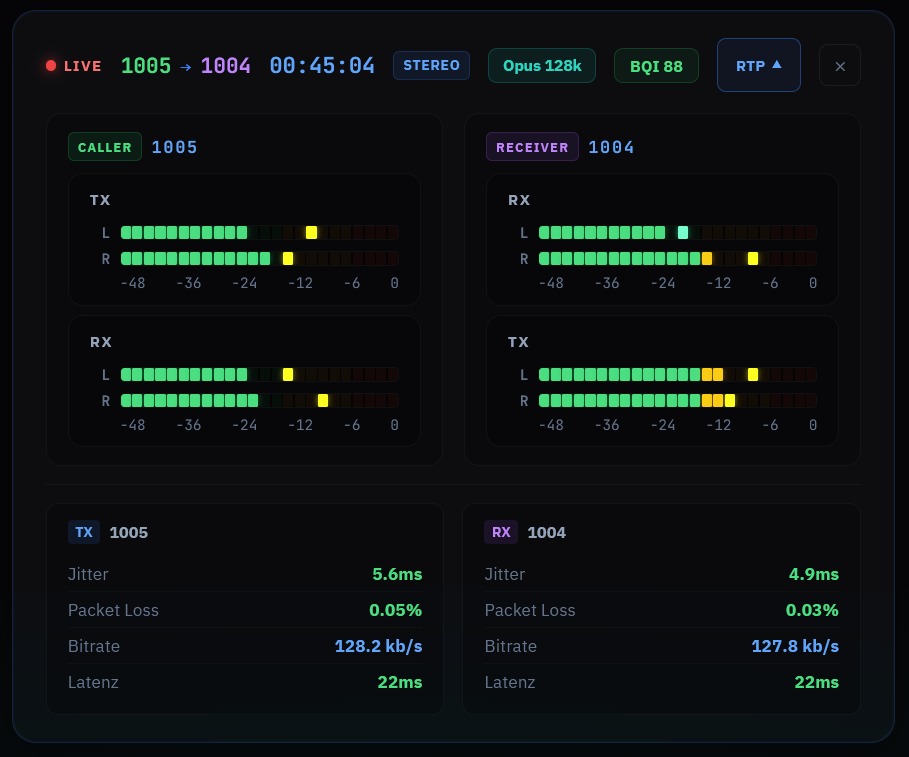
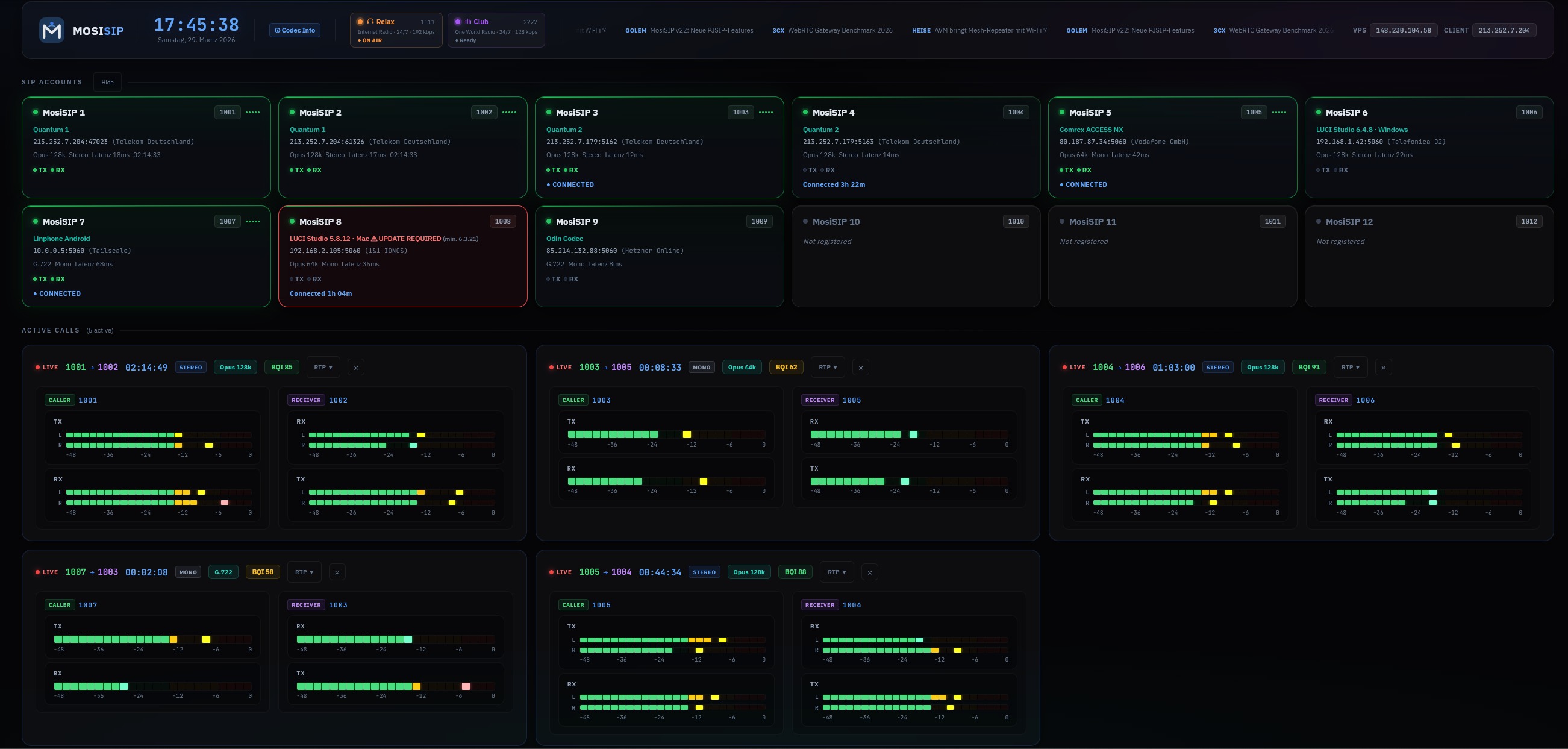
Full Dashboard — Endpoints, active calls with Stereo VU metering at a glance
Stereo VU Metering Live Stereo VU — per-channel dBFS
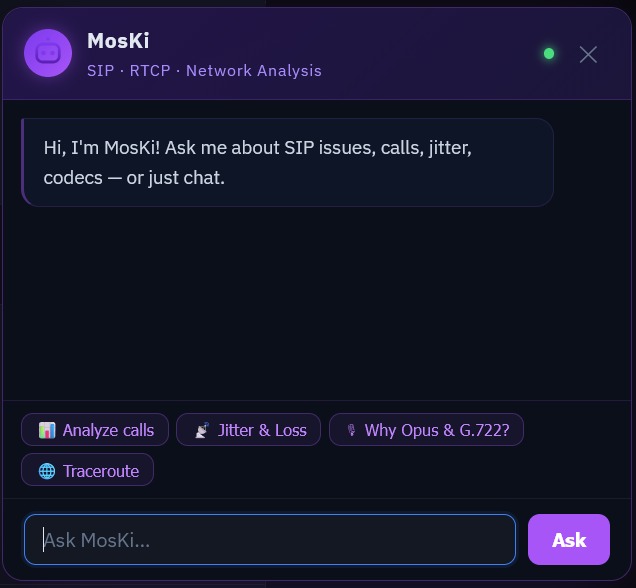
MosKi AI Copilot MosKi AI — reads your RTCP
MosiSIP

Stereo Metering

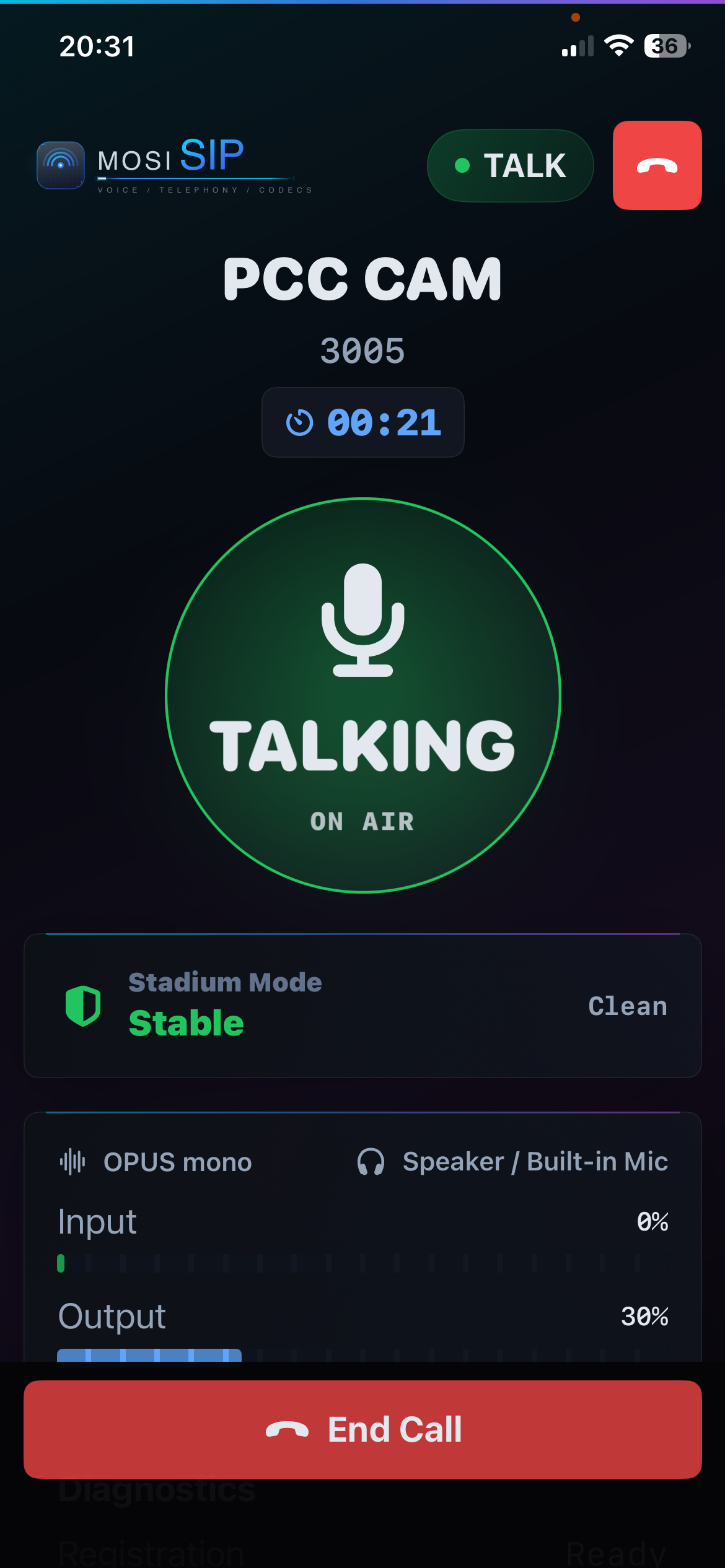
True L/R dBFS via raw RTP decode. Real levels from the network layer — not the client.

Live Call Quality

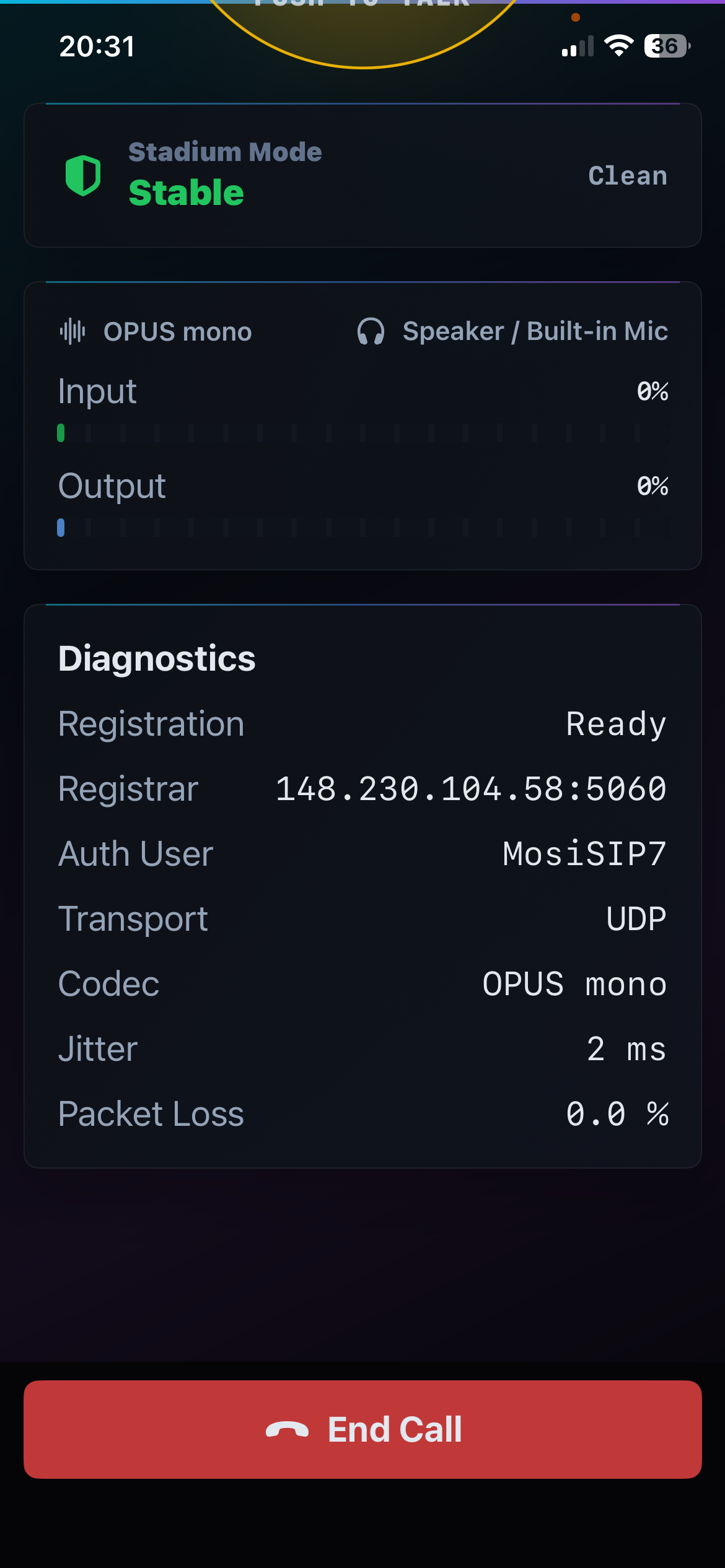
Jitter, packet loss, bitrate and broadcast quality index — live, not after the call is gone.

MosKi AI Copilot

AI with full live SIP context — codecs, jitter, trace. No manual log grep.

> why did call #42 drop at 14:32?
MosKi: RTP went silent 1.8s before BYE. Remote RTCP jitter spiked 180ms — likely network.

Device Intelligence

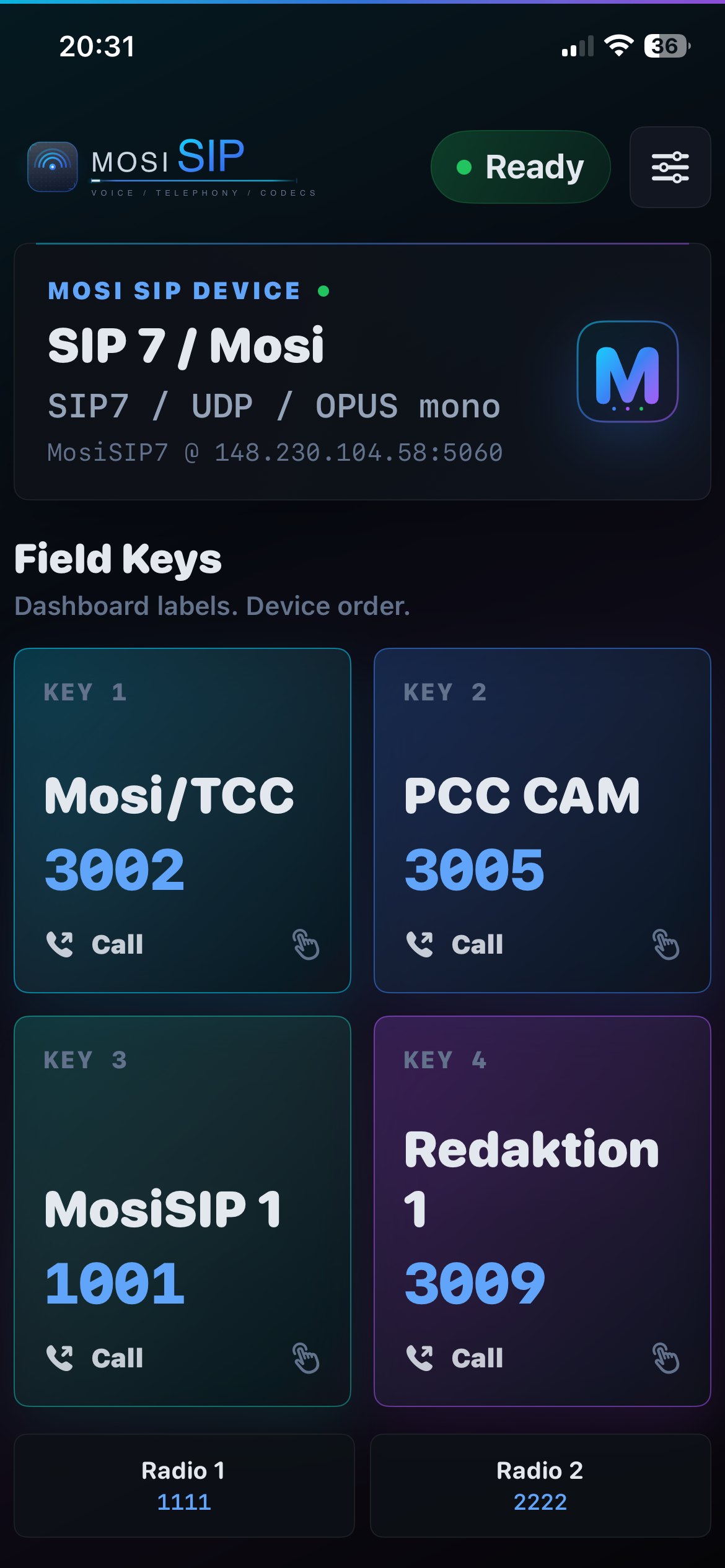
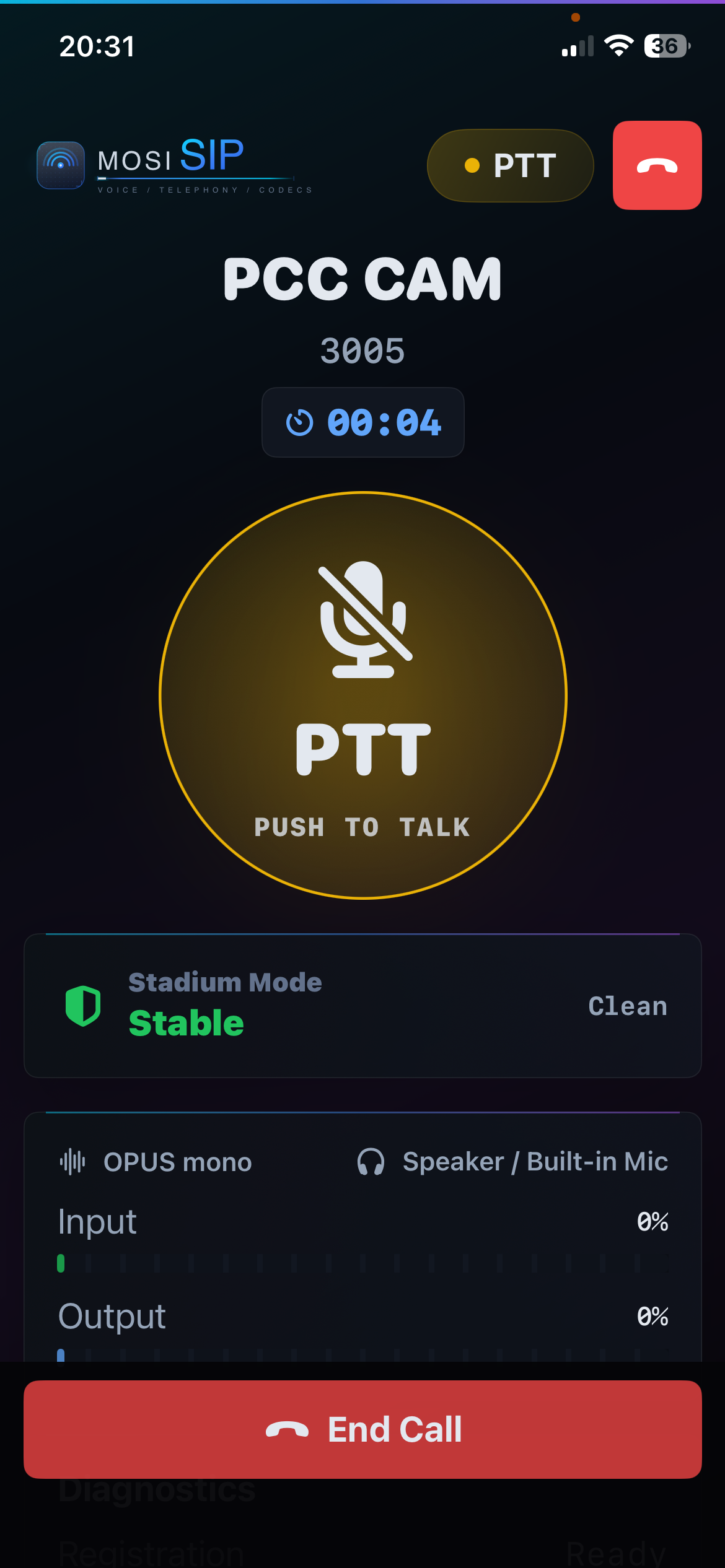
Detects codec model, firmware version and flags outdated firmware automatically.


MosiSRT

SRT Ingest

Receive SRT streams from any encoder and re-publish as HLS for instant browser playback.

Real-time Stats

7 key metrics with sparklines, quality badge and live connection health monitoring.

Audio VU Meter

Embedded VU metering for the SRT audio stream — monitor levels without leaving the page.

Commentator UX

Simplified view for commentators — connect, see your stream, monitor quality. Nothing else.


MosiCOM
Soon · 2026

The third pillar — live match stats, event ticker and xG timeline embedded next to the SRT feed. Built for the commentary position, not the analyst's desk.

Live Match Stats

Possession, shots, xG, corners, passes — updated in real time from the provider feed.

Event Ticker

Goals, cards and subs as they happen — with player names ready to read on air.

xG Race Chart

Both teams' expected-goals curves over 90 minutes — see the pressure build in one glance.

Tested firmware matrix
Verified in the field — not spec-sheet claims.
Device
Firmware
Status
Prodys Quantum ST+
k2.3.6
● Verified
Prodys Quantum 2AV
m3.0.4
● Verified
AVT MAGIC AC1 XIP
latest
● Verified
Digigram IQOYA *LINK
latest
● Verified
Luci Studio
6.20.1
● Verified
MicroSIP (Windows)
3.21.x
● Verified
PortSIP (desktop)
latest
● Verified
Other Riedel and generic SIP endpoints work — these are the combinations we run every week on live shows.
SIP

Straight answers

What engineers actually ask before they trial it.

On-prem or SaaS?
Fully-managed. SIP core, dashboard, capture and monitoring run on our infrastructure — you just point your codecs at us. EU hosting by default; dedicated nodes can be deployed worldwide on request, matched to your event location for low latency. Single-tenant or on-prem setups available for compliance-bound deployments.
Which codecs?
Opus Stereo (48k dual-mono), Opus Mono and G.722 wideband. DTMF via RFC 2833. We deliberately don't carry G.711 / narrowband — broadcast quality only.
NAT & symmetric carriers?
Static-IP codecs just register. Behind symmetric NAT (large OB-truck providers, mobile ISPs): we ship a preset with max_contacts=1, explicit contact-rewrite and forced TCP/TLS transport. STUN is automatic, re-register interval is tuned to ~50s so keepalive stays warm.
Endpoint limit?
No cap in private beta. Post-GA: per concurrent call, not per registered extension. 40 codecs provisioned but 2 active = you pay for 2. Tenant isolation via extension-ranges (1000/2000/3000).
Metrics, capture, export?
Dashboard shows live SIP signaling, registrations and per-call RTCP (jitter, loss, MOS). REST JSON at /api/status and /api/registrations. Full SIP capture and call-flow analysis — per-call PCAP export on request. Native metrics endpoint available if you ask.
How fast is onboarding?
Codec provisioned via the dashboard in under 5 minutes — SIP URI, auth credentials and codec-preferences get pre-generated per endpoint. First successful register usually within 2 minutes of configuring the device.
Alerts & security?
Offline-endpoint alerts via Telegram or email. fail2ban + CrowdSec block brute-force attempts at the edge. Auth via SIP digest, TLS 1.3 for signaling, SRTP optional for media. Per-tenant extension-range isolation keeps neighbours apart.
EU-hosted?
Frankfurt, Germany (Tier-3 EU datacenter). Both media and SIP signaling hit our SIP core directly — no US sub-processors in the audio path. Metadata (account, billing) stays in EU storage. Additional regional nodes available worldwide on request.
Existing PBX or carrier?
MosiSIP is a dedicated broadcast-SIP server — not just a monitoring overlay. Register your codec with us directly, or trunk to any existing SIP infrastructure — vendor-agnostic. Bridges survive reconnects, and external trunk calls are highlighted on the dashboard so you see the full picture.

SRT

Stream questions

What engineers ask before they push their first SRT stream.

Hosted or self-hosted?
Fully-managed. SRT ingest, HLS conversion, browser player and live stats run on our infrastructure — same EU-default / worldwide-on-request hosting as the SIP side. Single-tenant deployments available for compliance-bound setups.
Which encoders?
Any standard SRT encoder works — OBS, ffmpeg, hardware encoders, mobile bonded uplinks. Push mode (caller), AES-128 / AES-256 passphrase encryption supported. Vendor-agnostic.
Latency?
Sub-2s glass-to-glass on a clean network. SRT ingest tunes ARQ and latency-buffer per stream; HLS playback uses Low-Latency-HLS with 1-second segments and parts. iOS-compatible (iPhone, iPad, Safari).
Backup / failover?
Dual-stream support out of the box — push two independent SRT pushes (live + live2), the browser player exposes a one-click switcher with live status dots. Path-failover in under a second, no page reload.
Browser playback?
HLS.js-based player, no app, no plugin. Works on any modern browser (Chrome, Firefox, Safari, Edge). Embedded audio VU-meter, 7 live metrics with sparklines, quality badge. Commentator Mode strips it down to the essentials.
Stats & monitoring?
Live bitrate, RTT, packet loss, jitter, dropped frames, stream uptime and quality index — all sparkline-charted in the player. Encoder-side handshake stats exposed too. JSON endpoint available.
Security & access?
SRT passphrase encryption (AES-128 / AES-256). HTTPS-only HLS distribution behind your tenant. Dashboard auth uses the same login as the SIP side (TLS 1.3, fail2ban, edge brute-force protection).
Stream limit / pricing?
Two concurrent streams per tenant by default — more available on request. No cap during private beta. Post-GA: per concurrent stream, not per configured push slot. Aligned with the SIP pricing model — you pay for what is actually live.
Who builds this

Built by a broadcast engineer running OB trucks and live SIP/SRT infrastructure in the field. Every feature comes from a real show that almost broke — and the tool I wish I'd had in the rack at that moment.

No VC. No growth team. Just the engineering I'd want shipped if I were on the other side of the glass.

— Maximilian Mosgraber · Broadcast Engineer, Berlin

Request Beta Access

Private, invite-only. Tell us what you run and we'll provision an account.

Prodys AVT Digigram Riedel Luci Studio MicroSIP PortSIP Other